-
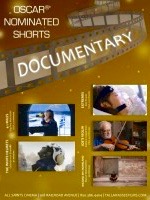
Oscar Nominated Shorts - Documentary A. Of the Oscar-Nominated Shorts, the documentary category, as in other years, sweeps the field (of Animations and live action) in brilliance and emotional heft. This year they comprise five short films, three of them about the war in Syria and refugees. The non-war two begin with "Joe's Violin," directed by Kahane Cooperman, about a Polish holocaust survivor sent to Siberia who came to the US at 17, a NYC resident, who in his late 80's joins a program of musical instrument donations to city schools, His violin that he bought for a carton of cigarettes at a refugee camp goes to a high school girl in a special school in the Bronx where all the girls study violin. He meets the girl, a touching moment. One criticism: we learn a lot about Joe, not much about the girl. The other is "Extremis," by Dan Krauss, a teacher at UC Berkeley's School of Journalism, focusing on a few patients in the ICU on life support whose family members and a d Dr. Jessica Nutik Zitter, the Oakland palliative care physician, discuss the painful topic of what to do. This short, intense treatment brings to mind the previous feature doc The Waiting Room, which similarly focused on Oakland's Highland Hospital. This is a topic worth a longer film. Last in this presentation comes "4.1," focused on a Greek coast guard captain who's one of those tasked with trying to save the thousands of Syrian refugees sent from Turkey by semi-criminal "smugglers." The topic resembles Gianfranco Rosi's Fire at Sea/Fuocoammare, but lacks Rosi's quirky dual subject matter and emphasizes the burden on the good guys in this desperate situation. And Rosi'f ilm is about Lampedusa, near the Libyan coast, receiving refugees from Africa. "4.1" was directed by a student at UCB's "J School" where Dan Krauss teaches, Daphne Matziaraki.
Oscar Nominated Shorts -Documentary B. Presents two longer docs, both powerful, and about the war in Syria. The first, "Watani" (وطني)/ "My Homeland," is by Filmmaker Marcel Mettelsiefen, who has been covering the Syrian Civil War for "Frontline," and is stunning, and beautiful, one of the best documentaries of the year, hands down. It concerns a Syrian family living in Aleppo in a neighborhood right on the edge of ISIS (which everybody but US seems to call "Daish," including Arabs, "for The Islamic State of Iraq and the Levant or "al-Dayla-l-Islamya f-l-Iraq w-ash-Sham"/الدولة الإسلامية في العراق والشام), because the husband and father is fighting for the revolutionaries. Someone names him, and he's captured by ISIS. Later the mother and the four children, a boy and three girls, go to Turkey, where they get visas to go to Germany, and are given a house in a small town whose aging population is dying out. Mettelsiefen and his crew follow this story seamlessly, and each family member is given a constant voice, and they are stunningly articulate. Mom is sad in Germany, but what's heartening is how the kids take to it, loving their school, and the eldest girl, Helen, is transformed into a liberated young woman. Thrilling stuff.
Not far below this is Orlando von Einsiedel's "The White Helmets," about the local team of Nobel Peace Prizewinning lifesavers in Syria who have saved over a hundred thousand lives, unearthing bombing victims from under the rubble. These mostly young men have a purity and hope that's deeply touching. They deserve to be in a class with Desmond T. Doss,the selflessly brave WWII hero so beautifully played by Andrew Garfield in Mel Gibson's Hacksaw Ridge: one of them says as he does that they have decided it is better to save souls than to take them. Again, wow. And these two films are a great lesson in Syrian Arabic dialect.
Last edited by Chris Knipp; 02-15-2017 at 03:14 PM.
 Posting Permissions
- You may not post new threads
- You may not post replies
- You may not post attachments
- You may not edit your posts
-
Forum Rules




 Reply With Quote
Bookmarks